

As the global solar industry continues to expand, project developers are placing greater emphasis not only on module efficiency but also on the performance of the structures that support photovoltaic systems. While traditional steel and aluminum solutions remain the mainstream choice, carbon fiber composite materials are gradually attracting attention in selected applications where weight, durability, and maintenance costs are important considerations.
A support structure for solar panels is expected to remain stable for decades while exposed to wind, rain, ultraviolet radiation, and changing temperatures. In coastal areas, chemical plants, and regions with high humidity or salt exposure, conventional metal structures may require additional corrosion protection or periodic maintenance over their service life.
To address these challenges, several manufacturers have introduced carbon fiber mounting brackets and other composite structural solutions. Unlike conventional metal supports, carbon fiber composites do not rust, and their mechanical properties remain relatively stable in corrosive environments. However, industry experts note that material selection should always depend on project requirements, installation conditions, and overall lifecycle cost rather than a single performance indicator.
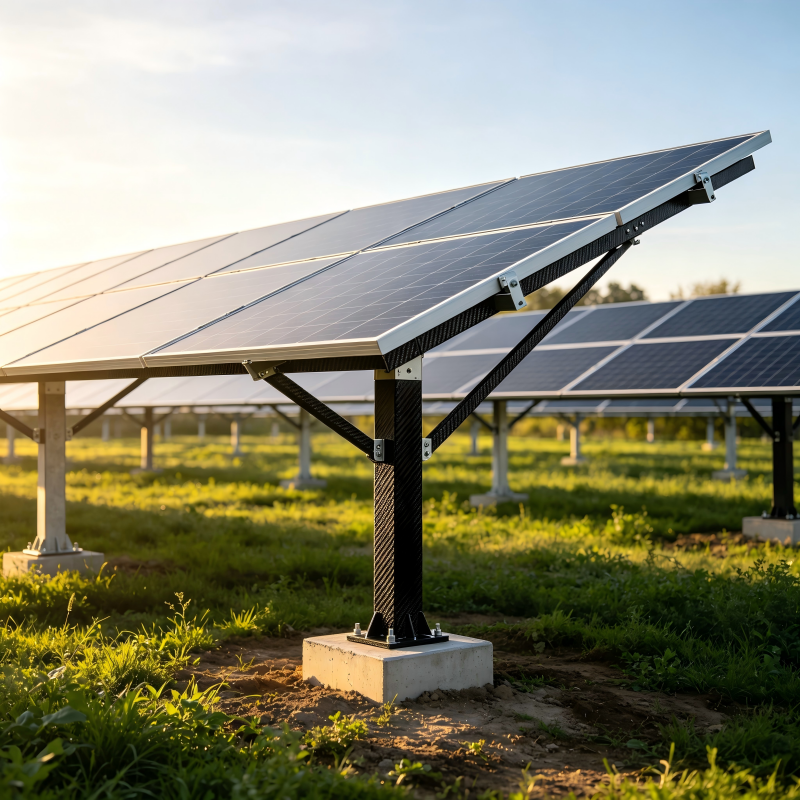
One of the most discussed advantages of lightweight solar mounting systems is easier transportation and installation. Composite materials typically weigh less than steel, which can reduce handling effort on construction sites and may simplify installation in locations where heavy lifting equipment is difficult to use. At the same time, lighter structural components can reduce the load transferred to rooftops or existing buildings, although engineers still need to evaluate each project according to local design standards.
In recent demonstration projects, the composite photovoltaic bracket has been tested in environments such as coastal solar farms, wastewater treatment facilities, and floating photovoltaic systems. These applications often expose structural materials to moisture, salt, or chemicals for extended periods, making durability an important factor in system design. Although long-term operating data are still being collected, early field observations suggest that composite materials can provide reliable structural performance under suitable conditions.
Another characteristic frequently highlighted is the use of a corrosion resistant solar bracket in locations where maintenance access is limited. Since composite materials are naturally resistant to many forms of corrosion, they may help reduce maintenance requirements over time. Nevertheless, specialists emphasize that factors such as structural design, manufacturing quality, installation practices, and environmental conditions all influence the actual service life of a mounting system.
As material technology continues to develop, the composite PV mounting bracket is becoming one of several alternatives available to project designers rather than a direct replacement for conventional materials. Steel, aluminum, and composite structures each have their own strengths, and selecting the most appropriate solution depends on technical requirements, project budget, local climate, and expected operating conditions.
Industry analysts believe that the market for composite solar mounting systems is likely to grow steadily in niche applications where corrosion resistance, reduced weight, and long-term durability offer measurable value. Rather than replacing traditional materials across the board, carbon fiber composite supports are expected to complement existing technologies as photovoltaic installations continue to diversify across different environments.