

1. Assess Compressed Air Demand
Begin by accurately estimating the required airflow based on actual production processes. It is advisable to evaluate both peak and average consumption to select a compressor that meets current needs while allowing some capacity for future expansion. Additionally, air quality requirements can be considered. For workshops requiring oil-free clean air sources, the oilless air compressor will be selected. General-purpose workshops, on the other hand, often choose reciprocating piston compressors.
2. Match Operating Pressure Requirements
Different manufacturing stages often require different pressure levels. Before making a decision, clearly define the pressure range needed for each application to avoid inefficiencies or failure to meet process requirements. For example, the reciprocating compressor, or recip compressor compressor for short, is often used in high-pressure industrial applications.
3. Durability and Service Life
As a long-term asset, an air compressor’s structural integrity, component quality, and meantime between failures should be carefully evaluated. Opt for models known for high reliability and longer maintenance intervals to ensure continuous operation and maximize return on investment.
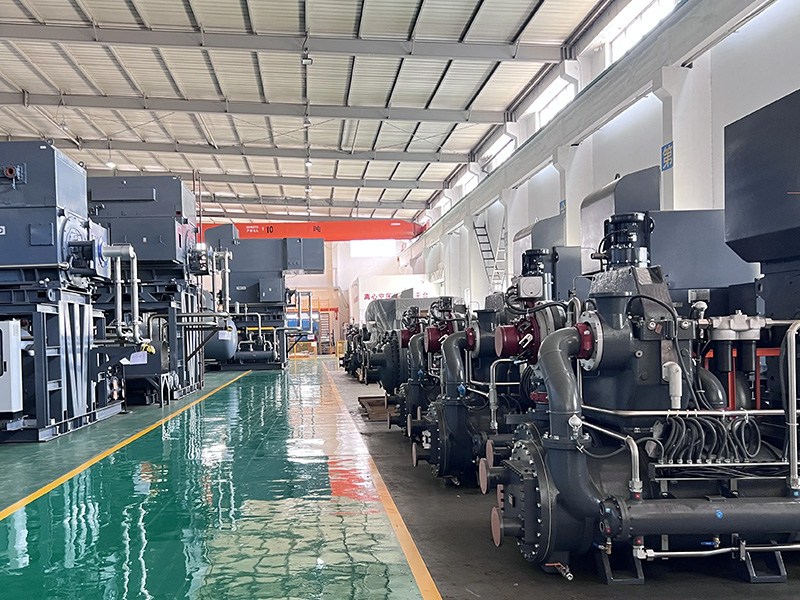
In addition to these core parameters, the following factors should also be taken into account:
-
Intended Use of Compressed Air
Depending on whether the air will be used to power pneumatic tools, support process operations, or serve as control air, select a compressor type and configuration that aligns with the specific application to ensure both suitability and efficiency. -
Footprint and Space Adaptation
For SMEs with limited space, the physical dimensions and layout of the compressor should be planned in advance. Compact, easy-to-maintain models are recommended to improve space utilization and simplify installation. The scroll air compressor has a compact structure and often occupy less floor space than the reciprocating compressor. -
Energy Efficiency and Operating Costs
Air compressors are significant energy consumers. Their efficiency ratings have a direct impact on long-term operating expenses. Prioritizing models with high energy efficiency and energy-saving features can help reduce electricity costs and support green manufacturing initiatives.
In summary, selecting an air compressor requires a comprehensive evaluation of actual demand, equipment performance, and usage scenarios. The scroll air compressor, oilless air compressor or piston type air compressor can be selected based on usage needs and scenarios. A well-informed decision will maximize both equipment effectiveness and economic benefits.