

A PCS (Power Conversion System) is the key device that connects a battery storage system to the power grid and electrical loads. It acts as the brain and muscle of the storage system, controlling when and how the batteries charge and discharge.
This device works both ways. It converts DC power from the batteries into stable AC power for the grid or local use. It also converts AC power from the grid into DC power to charge the batteries.
The PCS manages voltage, current, frequency, and power with speed and precision. It allows for charging and discharging at steady levels, which helps smooth out fluctuations from sources like solar and wind. This protects the battery and makes the entire power system more efficient and reliable.
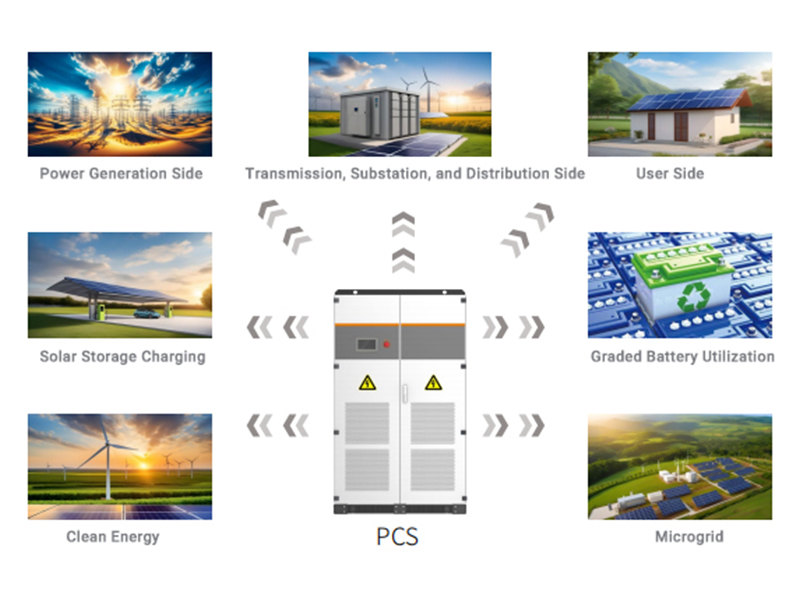
Inside an energy storage system, the PCS includes a bi-directional converter and a smart controller. The controller follows commands from the system operator. It talks directly to the Battery Management System (BMS) to monitor the battery's health, ensuring every charge and discharge cycle is safe.
The PCS operates in two main modes to fit different needs:
- Grid-connected mode: Here, it responds to signals from the grid operator. It stores energy when demand is low and sends power back when demand is high, helping balance the overall grid.
- Off-grid / Island mode: If the main grid goes down, the PCS can disconnect and power local loads on its own. It provides clean, reliable AC power just like the normal grid would.

As the essential platform for energy conversion and control, the PCS brings intelligence, flexibility, and strength to modern energy systems. It supports renewable energy, grid stability, microgrids, and backup power solutions.